Custom MTB wheel buying guide
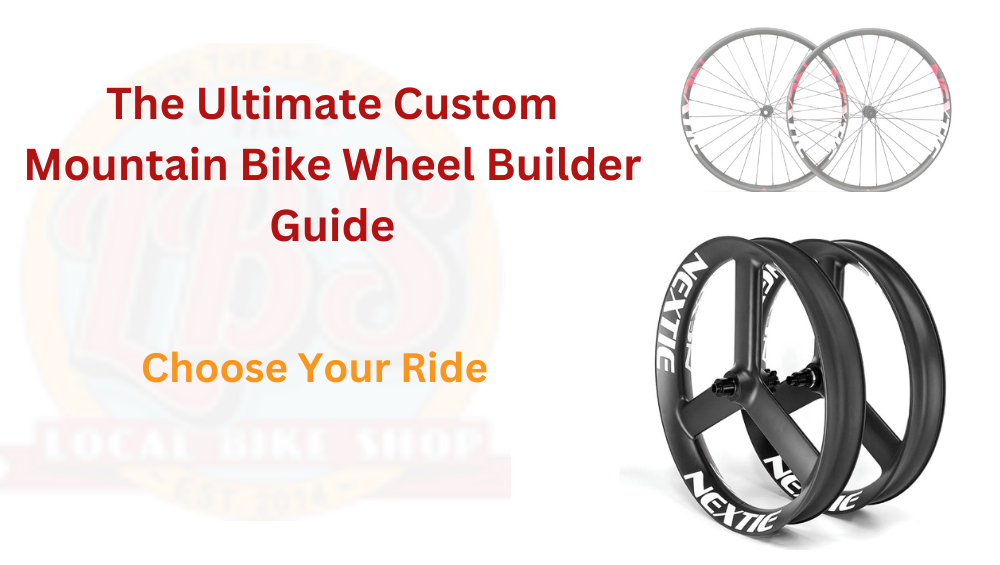
Custom Mountain Bike Wheel Builder Guide
A custom MTB wheelset should match your riding style, hub standard, rim width, spoke count, brake interface, freehub body, and budget. Use this guide to choose the right build before you order parts or ask The LBS for help.
Quick answer: what makes a good custom MTB wheel build?
A good custom mountain bike wheel build starts with the terrain first. Cross-country riders usually want lighter rims and faster acceleration. Trail and enduro riders need more impact strength. Downhill and freeride builds need the strongest rim, hub, spoke, and tyre setup you can reasonably run. After that, match the hub spacing, axle, brake mount, freehub body, rim width, spoke count, and tyre size to your bike.
Start with the ride, not the parts list
A wheel builder is useful only when it turns your riding style into the right component choices. Before choosing rims, hubs, and spokes, decide whether the wheelset is for cross-country speed, trail riding, enduro abuse, downhill strength, fatbike flotation, or a mixed-use build.
The LBS is strongest when the build needs technical fitment help, especially around Hope hubs, axle standards, brake interfaces, freehub bodies, and replacement spares.
Custom MTB wheel builder checklist
| Choice | What to check | Why it matters |
|---|---|---|
| Wheel size | 27.5″, 29″, mullet, fatbike, or plus setup | Controls tyre options, handling, rollover, and frame clearance |
| Rim width | Internal width matched to tyre size and riding style | Affects tyre shape, support, grip, and burp resistance |
| Hub spacing | Front and rear axle standard, Boost or non-Boost, Super Boost, QR, or thru axle | The wheel must fit the frame and fork before anything else |
| Brake interface | 6-bolt or Center Lock | Must match your rotors or the rotors you plan to buy |
| Freehub body | HG, XD, XDR, MicroSpline, or single-speed/trials use | Must match the cassette and drivetrain |
| Spoke count | 28H, 32H, or stronger specialty builds | Balances weight, stiffness, strength, and serviceability |
| Hub choice | Engagement, bearing support, spares, colors, and service tools | A good hub makes the wheel easier to service and keep long term |
Light and fast
Cross-country
Choose a lighter rim, sensible spoke count, and quick-engaging hubs if climbing and acceleration matter most.
Balanced build
Trail and all-mountain
Look for a rim wide enough for modern tyres, reliable hubs, and a build that balances weight with everyday strength.
Strength first
Enduro and downhill
Prioritize impact resistance, serviceable hubs, stronger spokes, and rim choice over chasing the lowest possible weight.
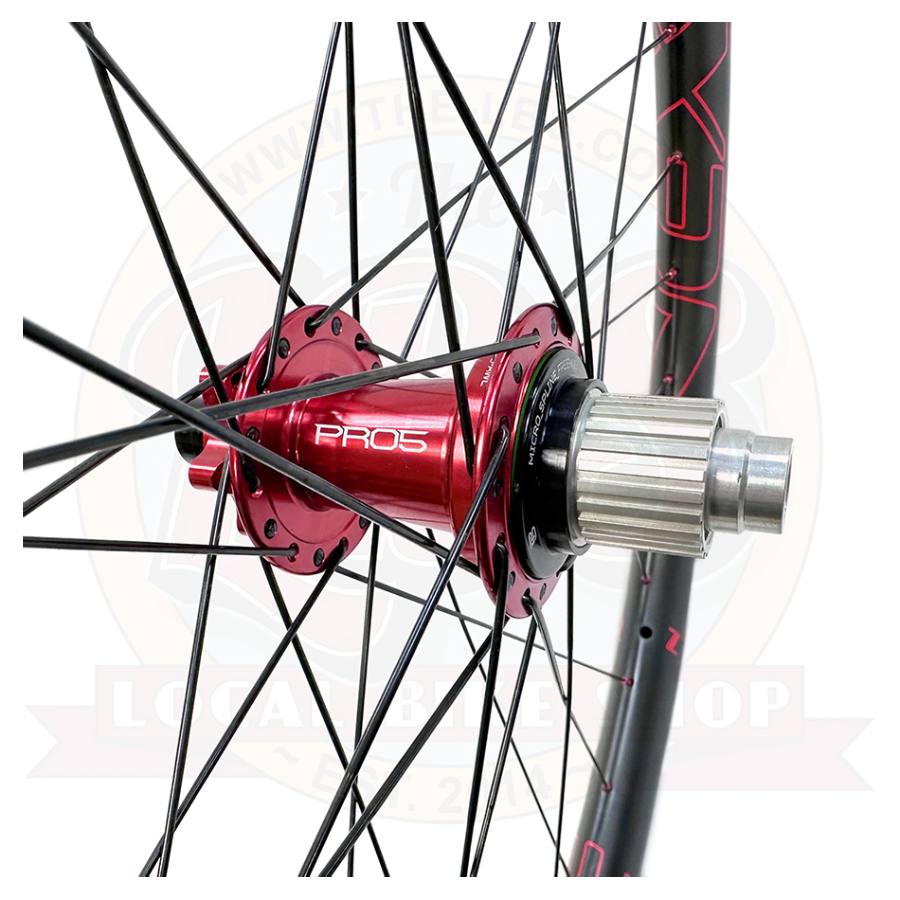
Why Hope Pro 5 hubs are a strong custom wheel choice
If you are building a custom MTB wheelset around Hope parts, the hub choice matters as much as the rim. Hope Pro 5 hubs are a strong match for riders who want reliable engagement, color options, serviceable bearings, available spares, and a hub family that can be supported long after the first build.
Before ordering, check axle spacing, brake mount, spoke hole count, and cassette/freehub standard. A rear hub for a 148 x 12mm Boost bike is not the same purchase as a 135mm QR, 142 x 12mm, 157mm Super Boost, or single-speed/trials setup.
How to choose the right mountain bike wheel build
- Confirm your frame and fork standards. Check wheel size, axle type, hub spacing, rotor mount, and tyre clearance.
- Choose the riding category. Cross-country, trail, enduro, downhill, fatbike, and gravel builds need different priorities.
- Pick the rim width around the tyre. The rim should support the tyre without making it too square or too vague in corners.
- Match the freehub body to the cassette. HG, XD, XDR, and MicroSpline are not interchangeable without the correct freehub.
- Choose a spoke count that suits the rider. Heavier riders, aggressive terrain, and bikepacking loads usually justify a stronger build.
- Plan future service. A custom wheel is easier to keep running when bearings, end caps, freehub parts, spokes, and tools are available.
Do not skip the fitment check
A wheel can be beautifully built and still be wrong for the bike. If you are unsure about Boost spacing, axle length, rotor mount, driver body, spoke hole count, or tyre clearance, ask before ordering. It is easier to confirm the standard now than rebuild the wheel later.
Custom wheel build examples
| Build type | Good starting point | Best for |
|---|---|---|
| 29″ cross-country | 29″ carbon XC wheelset | Fast trail and race-style riding |
| 29″ all-mountain/enduro | 29″ AM/enduro carbon wheelset | Rougher terrain with a strength-first bias |
| 29″ downhill/freeride | 29″ DH carbon wheelset | Bike park, heavy hits, and maximum durability |
| Hope Pro 5 build | Hope Pro 5 custom wheelset | Riders who want Hope hubs, spares support, and serviceability |
Need help choosing the build?
Use the custom wheel pages as a starting point, then confirm your frame, fork, hub spacing, brake mount, cassette standard, and tyre plan. The LBS can help you avoid buying a wheelset that is strong on paper but wrong for your bike.
Custom MTB wheel builder FAQ
What should I check before ordering custom MTB wheels?
Check wheel size, axle spacing, brake rotor mount, freehub body, tyre clearance, rim width, spoke count, and whether the build suits your riding style. If any of those are uncertain, confirm them before ordering.
Are custom MTB wheels worth it?
Custom MTB wheels are worth it when a stock wheelset does not match your bike, weight, riding style, or service expectations. They are especially useful when you want a specific hub, rim width, spoke count, freehub body, or color combination.
What is the best hub for a custom mountain bike wheel?
The best hub depends on spacing, brake interface, cassette standard, engagement preference, color, and service support. Hope Pro 5 hubs are a strong option when you want serviceable hubs with good spares support and multiple fitment options.
How wide should MTB rims be?
Rim width should match tyre width and riding style. Narrower rims can suit lighter cross-country tyres, while wider rims can better support aggressive trail, enduro, and downhill tyres. Check tyre and frame clearance before choosing.
Can I build mountain bike wheels myself?
You can build wheels yourself if you have the correct tools, spoke lengths, tensioning knowledge, and patience. For most riders, a professionally built or checked wheelset is safer and more reliable, especially for enduro, downhill, e-bike, or heavy-duty use.