How to Shift Gears on a Mountain Bike: A Simple Trail Guide
If you are learning how to shift gears on a mountain bike, the main rule is simple: shift before the trail forces you to. Use easier gears before a climb, harder gears as the trail opens up, and ease pressure on the pedals while the chain moves. Most rough shifting comes from waiting too long, pedaling too hard during the shift, or riding in a gear that makes your legs grind instead of spin.
This guide keeps the explanation practical. It covers what the right-hand shifter does, what the left-hand shifter does on older 2x and 3x bikes, when to shift on climbs and descents, and how to avoid chain noise, dropped chains, and unnecessary drivetrain wear.
Quick answer: which way do mountain bike gears work?
| Situation | Use this gear | What it feels like | When to shift |
|---|---|---|---|
| Climbing, slow trail, loose ground | Easier gear | Less force per pedal stroke, faster leg spin | Before the hill gets steep |
| Flat trail, steady speed | Middle of the cassette | Smooth cadence without spinning out | One click at a time as speed changes |
| Downhill or fast fire road | Harder gear | More resistance, more speed per pedal stroke | After speed increases, not while coasting |
| Technical section | Slightly easier than normal | Ready to accelerate without a heavy pedal stroke | Before rocks, roots, or a tight turn |
Think of gears as cadence control
Do not think of gears as a punishment for being tired. Think of them as a way to keep your legs turning at a useful rhythm. If every pedal stroke feels like a leg press, shift easier. If your feet are spinning quickly but the bike is not moving faster, shift harder.
On a mountain bike, this matters more than it does on a smooth road because traction changes quickly. A lighter gear lets you keep pressure smooth over loose dirt, wet roots, or a steep ramp. A gear that is too hard makes you stomp on the pedals, which can break traction or make the rear wheel skip.
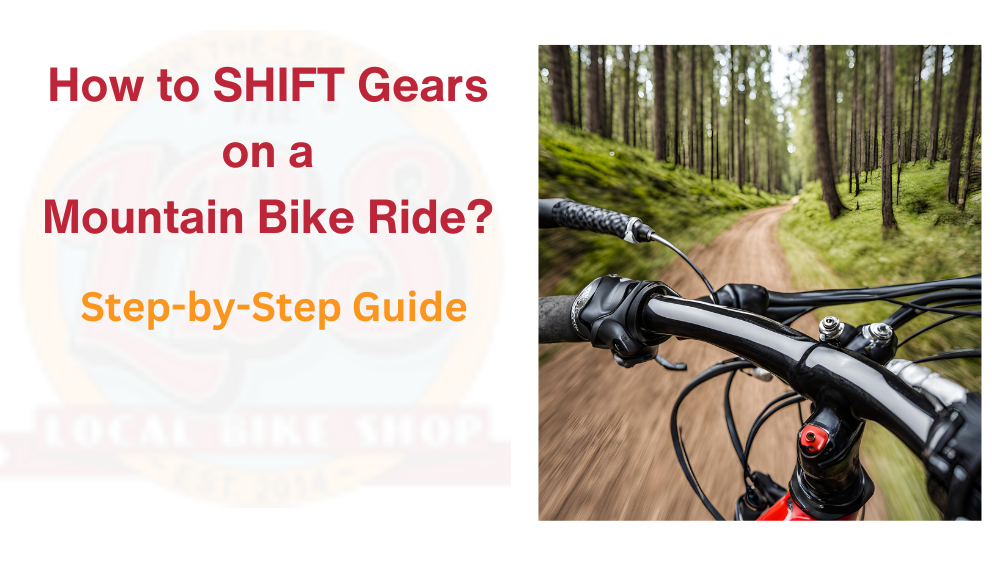
Right-hand shifter: your main mountain bike gear control
Most modern mountain bikes use a single chainring at the front and a wide cassette at the back. That means the right-hand shifter does nearly all the work. It moves the chain across the rear cassette.
- Move the chain to a bigger rear cog for an easier gear.
- Move the chain to a smaller rear cog for a harder, faster gear.
- Shift one or two clicks at a time when the trail is changing normally.
- Make several clicks before a steep climb, not halfway up it under full force.
The exact lever direction depends on the shifter, but the result is easy to feel. If your legs spin faster with less force, you shifted easier. If each pedal stroke moves the bike farther but takes more force, you shifted harder.
Left-hand shifter: only for bikes with front gears
If your bike has two or three chainrings at the front, the left-hand shifter changes the front derailleur. Use it for bigger range changes, not constant fine tuning.
| Front setup | Use the smaller chainring for | Use the larger chainring for | Common mistake |
|---|---|---|---|
| 2x drivetrain | Climbing, slow trail, technical riding | Fast flats, road sections, descents | Changing the front ring under heavy load |
| 3x drivetrain | Very steep climbs and slow control | Faster paths and road transfers | Cross-chaining at the extreme ends |
| 1x drivetrain | Not applicable | Not applicable | Expecting a left shifter that is not there |
Many newer mountain bikes are 1x, so they have no front shifter. That is normal. The wide rear cassette gives the gear range instead.
How to shift before a climb
The best climbing shift happens before the climb. As you approach the hill, click into an easier gear while the pedals are still turning smoothly. Once you are already on the steep part, the chain is under more tension and the shift is more likely to hesitate, clunk, or skip.
If you misjudge it and end up in too hard a gear, do not mash the pedals and force the shift. Put in one firm pedal stroke to keep momentum, then soften your pressure for a moment and shift one or two gears easier. Keep pedaling, but make the pedal stroke light while the derailleur moves.
How to shift on flat trail
On flat trail, aim for a steady rhythm. If you are accelerating, shift one click harder after the bike gains speed. If the trail slows, shift one click easier before your legs start grinding.
This is where beginners often overthink it. You do not need a perfect gear. You need a gear that lets you keep control without fighting the bike. One click either way is usually enough.
How to shift before a descent
Before a descent or fast section, shift a little harder so the pedals still have resistance when you need to add speed. If you stay in your easiest climbing gear, your feet may spin without adding useful drive.
Do not shift while coasting and expecting the chain to move immediately. Derailleur gears need the chain to be moving, so shift while gently pedaling. On rough ground, make the shift before the trail gets chaotic.
What beginners get wrong
- Waiting until the hill is already steep before shifting easier.
- Pedaling hard while asking the chain to move across the cassette.
- Using the hardest gear because it feels faster for a few seconds.
- Staying in the easiest gear on a descent and spinning out.
- Ignoring chain noise, skipping, or a bent derailleur hanger.
Good shifting is quiet. You will still hear the chain move, but it should not sound like it is being forced. If the bike regularly skips under load, the issue may be adjustment, cable tension, chain wear, cassette wear, or a derailleur hanger that is no longer straight.
Simple gear choices for common trail moments
| Trail moment | Gear choice | Why it works |
|---|---|---|
| Short punchy climb | Two or three clicks easier before the base | Keeps cadence alive without a panic shift |
| Long steady climb | Easy enough to keep breathing controlled | Saves legs and improves traction |
| Loose corner exit | One gear easier than your normal flat gear | Lets you accelerate without stomping |
| Fast fire road | Harder gear after speed builds | Stops you spinning out |
| Rocks and roots | Shift before the rough section | Protects the chain and keeps both hands settled |
When shifting problems are not your fault
If you are using the right technique and the bike still shifts badly, check the bike. A sticky cable, worn chain, dirty cassette, bent hanger, tired jockey wheels, or badly adjusted derailleur can make even careful shifting feel rough.
Chain wear is especially worth watching. A worn chain can damage the cassette and chainring if it is left too long. If the drivetrain feels rough across several gears, start with cleaning and inspection before blaming your timing.
If you are rebuilding or servicing the bike, the chains section is the natural place to start. For bigger bike setup decisions, the custom mountain bike wheel builder guide can also help you think through riding style, terrain, and component choices together.
Quick practice drill
- Find a quiet flat path with no traffic.
- Pedal at an easy pace and shift one click easier.
- Feel how your legs speed up.
- Shift one click harder and feel the resistance increase.
- Repeat until the direction becomes automatic.
- Then practice shifting easier before a small hill, not on the steepest part.
Five minutes of this is more useful than memorizing every gear combination. The goal is to make the shift before you need it.
FAQ
Which gear should I use when climbing on a mountain bike?
Use an easier gear before the climb starts. The right gear lets you keep pedaling smoothly without standing on the pedals or losing rear-wheel traction.
Should I pedal while shifting gears?
Yes, but pedal lightly. Derailleur gears need the chain to move, but heavy pressure during the shift can cause clunks, hesitation, or skipping.
What does the right shifter do on a mountain bike?
The right shifter moves the chain across the rear cassette. Bigger rear cogs are easier for climbing. Smaller rear cogs are harder and faster.
Why does my mountain bike skip when I shift?
Common causes include shifting under too much load, cable tension that needs adjustment, chain or cassette wear, dirty drivetrain parts, or a bent derailleur hanger.
Is a 1x mountain bike harder to shift?
No. A 1x bike is usually simpler because the right shifter handles the rear cassette and there is no front derailleur to manage. You still need to shift before climbs and ease pressure during shifts.
Sources checked
This guide was refreshed against current Search Console query demand for this page and checked against practical shifting guidance from Trek, Liv Cycling, Cycling UK, BikeRadar, and Sheldon Brown.